
Restorative solutions that flow from revolutionary science

Who We Are

Our mission is to forge new frontiers in cardiac care by pioneering science-driven and measurable advancements to restore heart valve patients to healthy function.

We are focused on disrupting heart valve disease and restoring healthy heart function. Our team focuses on tackling clinical gaps and redefining positive outcomes by developing cutting-edge solutions designed to mimic the heart’s native physiology.

Our Technologies

A New Class of TAVR

Designed with physicians for patients, DurAVR® Transcatheter Heart Valve (THV) uses a single-piece, native-shaped biomimetic design built to mimic the performance of a healthy aortic valve. 

Latest News

News, Presentations and Interviews

Latest News

News, Presentations and Interviews

Aortic Valve Area Reduction: A Novel Concept to Quantify Aortic Stenosis Severity
  • presentation

Aortic Valve Area Reduction: A Novel Concept to Quantify Aortic Stenosis Severity

Presented at London Valves and sponsored by Anteris, Dr. Miho Fukui’s research focuses on a new concept that uses a percentage in aortic valve area (AVA) reduction for determining disease severity, rather than applying the same AVA cutoffs to all patients despite different valve sizes.

London Valves 2025 Physician Interview
  • interview

London Valves 2025 Physician Interview

Hear perspectives from Prof. Ole De Backer and Prof. Nicolas Van Mieghem about the recent DurAVR® THV data and the PARADIGM Trial in this 2-part discussion series. 
 
Part 1 highlights the PARADIGM trial—the first all-comers, head-to-head TAVI trial and the first TAVI trial designed to evaluate post-procedure blood flow patterns using cardiac MRI. With participation from 80 centers across the US, Canada, and Europe, recent FDA IDE approval, and first enrollments already completed in Denmark in October, the PARADIGM Trial is expected to enroll quickly, and the data gathered will be used to support future commercial approval of the DurAVR® valve for patients across all risk categories. 
 
Part 2 focuses on Prof. De Backer’s presentation of 30-day outcomes from 100 small annuli DurAVR® THV patients, providing early insights into clinical performance. DurAVR® THV demonstrated a favorable hemodynamic profile at 30 days, including 97% freedom from moderate or greater patient-prosthesis mismatch (PPM).1


De Backer O. Oral Presentation at: PCR London Valves; Nov 2025; London, UK.

DurAVR® THV Clinical Data Update at London Valves 2025
  • presentation

DurAVR® THV Clinical Data Update at London Valves 2025

At London Valves, Prof. Ole De Backer presented 30-day data from 100 small annuli patients treated with DurAVR® THV in the EMBARK and EFS studies. 


Highlights of 30-Day Results for 100 Small Annuli Patients Implanted with the DurAVR® THV
 

  • DurAVR® THV delivered a favorable hemodynamic profile with a large EOA of 2.2 ± 0.3 cm2, a single digit mean pressure gradient (MPG) of 8.2 ± 3.1 mmHg. 
  • At 30 days, clinical safety outcomes were positive with no valve-related mortality and no moderate or severe paravalvular leak (PVL). 
  • 97% freedom from moderate or greater prosthesis-patient mismatch*  
  • A technical success rate** of 100% was achieved in the last 50 consecutive patient implants


*Prosthesis‐patient mismatch (PPM) happens when a prosthetic valve, after being implanted, doesn't have a large enough opening (EOA) to accommodate the patient's blood flow needs, based on their body size. The result is higher than expected gradients. PPM affects a significant proportion of transcatheter aortic valve (TAVR) patients, particularly patients with a small aortic annulus and has been associated with impaired long-term survival following surgical aortic valve replacement (SAVR).

**As defined in VARC-3.

Aortic Valve Area Reduction: A Novel Concept to Quantify Aortic Stenosis Severity
  • presentation

Aortic Valve Area Reduction: A Novel Concept to Quantify Aortic Stenosis Severity

Presented at TCT and sponsored by Anteris, Dr. Miho Fukui’s research focuses on a new concept that uses a percentage in aortic valve area (AVA) reduction for determining disease severity, rather than applying the same AVA cutoffs to all patients despite different valve sizes.

DurAVR® THV Clinical Data Update at TCT 2025
  • presentation

DurAVR® THV Clinical Data Update at TCT 2025

At TCT, Dr. Rishi Puri presented data from DurAVR® THV clinical experience, demonstrating a favorable hemodynamic profile for 37 patients sustained to 1-year follow-up. 


One-year Results Highlights:

  • DurAVR® THV demonstrated a favorable hemodynamic profile sustained to one-year, with an Effective Orifice Area (EOA) of 2.1 ± 0.2 cm2, a Mean Pressure Gradient (MPG) of 8.6 ± 2.6 mmHg and Doppler Velocity Index (DVI) of 0.58.
  • At one-year, clinical safety outcomes show positive results with no valve or cardiovascular related mortality and, importantly, no prosthesis-patient mismatch (PPM) reported in these small annuli patients (aortic annulus area 395.80 ± 37.26mm2) at one-year follow-up.
Special Meeting of Stockholders
  • investor

Special Meeting of Stockholders

Anteris Technologies Global Corp. announces that on September 29, 2025, the Company held a Special Meeting of Stockholders (the Special Meeting) at which a quorum was present. The matters listed below were submitted to a vote of the Company’s stockholders at the Special Meeting through the solicitation of proxies. Detailed descriptions of the proposals are included in the Company’s definitive proxy statement on Schedule 14A filed with the Securities and Exchange Commission on August 18, 2025 (the “Proxy Statement”).


A total of 18,687,740 shares of the Company’s common stock were present at the Special Meeting in person, by virtual attendance, or by proxy, which represents approximately 51.8% of the shares of common stock outstanding as of August 11, 2025, which was the record date for the Special Meeting.


A recording of the meeting will be available at this link for 90 days after the meeting.

Studying the Clinical Impact of Restoring Native Flow with DurAVR® THV
  • presentation

Studying the Clinical Impact of Restoring Native Flow with DurAVR® THV

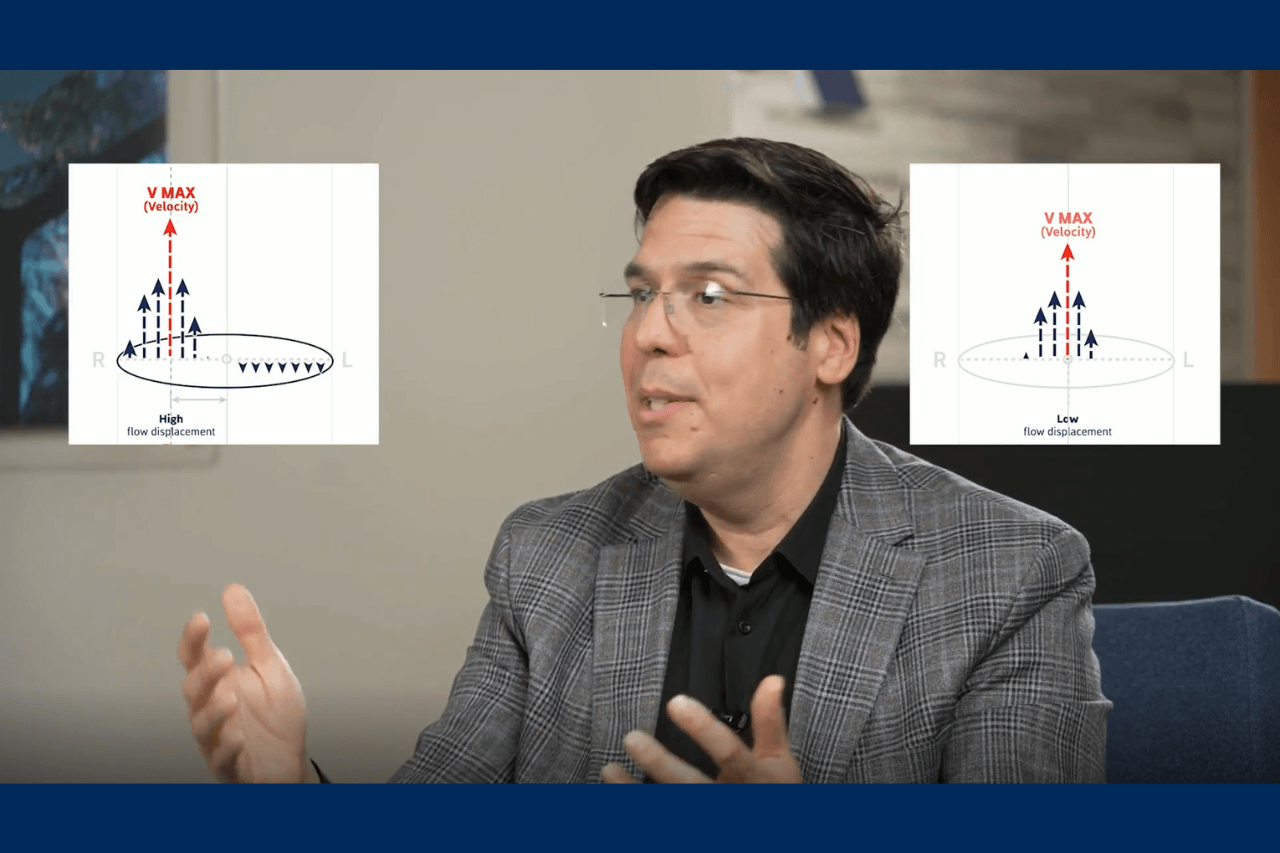
AS affects the valve, vessels, and myocardium. This webinar discusses how DurAVR® THV restores laminar flow, improving LV function and mass regression in AS patients, shifting focus from traditional metrics to whole-heart function.

Presented by: Drs. Martin B. Leon, Tsuyoshi Kaneko, Brian Lindman, and Jeffrey Popma.

  • Part 1: The Importance of Flow Dynamics in Aortic Stenosis Intervention
  • Part 2: Implications of Laminar Flow on Aortic Stenosis Outcomes
  • Part 3: LV Mass Regression: A Target for Better TAVR Outcomes
The Importance of Laminar Flow in TAVR
  • whitepaper

The Importance of Laminar Flow in TAVR

In this whitepaper, we review the pathophysiology of aortic stenosis—including upstream and downstream consequences of turbulent flow—and offer hypotheses around the impacts of TAVR design on flow patterns and disease regression.

We will explore answers to questions like:

  • How do flow patterns impact the cardiovascular system?
  • Does valve design impact flow patterns?
DurAVR® THV Clinical Data Update at Sydney Valves
  • presentation

DurAVR® THV Clinical Data Update at Sydney Valves

At Sydney Valves, Dr. Rishi Puri presented data from DurAVR® THV clinical experience, demonstrating a favorable hemodynamic profile for 37 patients sustained to 1-year follow-up. 


One-year Results Highlights:

  • DurAVR® THV demonstrated a favorable hemodynamic profile sustained to one-year, with an Effective Orifice Area (EOA) of 2.1 ± 0.2 cm2, a Mean Pressure Gradient (MPG) of 8.6 ± 2.6 mmHg and Doppler Velocity Index (DVI) of 0.58.
  • At one-year, clinical safety outcomes show positive results with no valve or cardiovascular related mortality and, importantly, no prosthesis-patient mismatch (PPM) reported in these small annuli patients (aortic annulus area 395.80 ± 37.26mm2).


“The one-year data for DurAVR® THV continues to validate its groundbreaking hemodynamic performance, demonstrating sustained excellent effective orifice area (EOA) and low mean gradients. Most notably, this is the only transcatheter valve to show zero prosthesis-patient mismatch (PPM) in small annuli patients—an achievement that sets a new standard in TAVR. PPM is a well-established predictor of valve failure and disease progression, and eliminating it has profound implications for long-term patient outcomes. These results reinforce the transformative potential of DurAVR® as we move toward pivotal trials.” - Christopher Meduri, Anteris Chief Medical Officer

MRI Data Update on First-in-Human Study at London Valves
  • presentation

MRI Data Update on First-in-Human Study at London Valves

At London Valves 2024, Dr. Pankaj Garg presented cutting-edge cardiac MRI analyses, which compared flow dynamics and LV function between DurAVR® THV recipients and a healthy control group. These promising data highlight the potential of DurAVR® THV to mimic the performance of a healthy aortic valve as a result of the valve's biomimetic design.