
June 24, 2026
Beyond the Gradient: Restoring Native Flow with TAVR for Enhanced LV Recovery
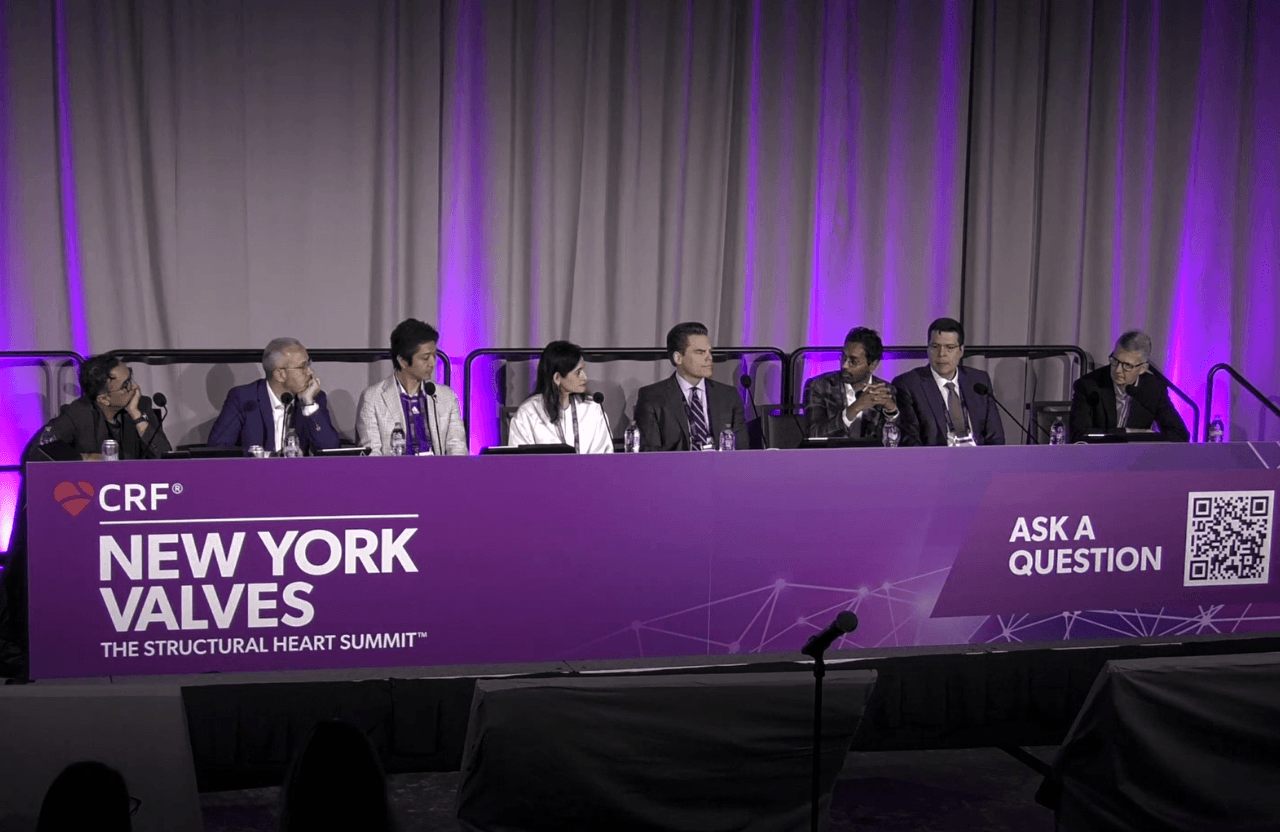
Despite favorable post-TAVR pressure gradients, some patients continue to experience symptoms. In this New York Valves symposium, experts explore the role of physiologic flow patterns after TAVR and discuss early data suggesting that commercially available transcatheter valves may not restore healthy, native laminar flow.
Pressure gradients are helpful measures for diagnosing valve disease and quickly assessing pre- and post-TAVR valve performance—but they don’t tell the full story when it comes to optimal flow, and patients may still experience symptoms after TAVR even with good gradients (<10 mmHg). In this recorded symposium from New York Valves, learn more about flow patterns and what impact restoring physiologic flow patterns may have on patient outcomes after a TAVR procedure and early data revealing that commercially available TAVR do not restore physiologic laminar flow.
Full Agenda:
- Biomimetic TAVR: What is it and why do we need it?
- Case: How do we understand TAVR success in 2026?
- Aortic stenosis is more than a valve disease
- Valve performance: More than just the gradient
- The science of post-TAVR aortic flow: What the MRI data are telling us
- Building the evidence base: What the field needs next
Presented by: Mohamed Abdel-Wahab, Anita Asgar, Joao Cavalcante, Tsuyoshi Kaneko, Amar Krishnaswamy, Azeem Latib, Brian Lindman, Stephan Windecker